Continuous integration pipelines have been the standard mechanism for enforcing code quality since the mid-2010s. Linting, unit tests, type checking, coverage thresholds — these gates catch well-defined, mechanically detectable problems before they reach production. What they cannot catch is everything that requires reading the code as a developer would: logic that is syntactically correct but semantically wrong, patterns that introduce subtle security vulnerabilities, or implementations that technically pass tests but diverge from the intended design.
AI-powered code review in CI/CD fills exactly this gap. This article covers the architecture of an effective AI review pipeline, the specific integration patterns for GitHub Actions and GitLab CI, and the calibration decisions that determine whether AI review is a useful quality gate or a source of noise that developers learn to ignore.
What AI Code Review Does in a Pipeline
Before building the integration, it is worth being precise about what AI code review in a CI/CD context actually analyzes. The most effective implementations focus on four categories:
Logic correctness on changed code: Does the implementation of new or modified functions match their documented intent and type signatures? This includes detecting off-by-one errors, incorrect null handling, missed edge cases, and logic inversions that type checkers cannot catch.
Security pattern detection: Does the changed code introduce SQL injection vectors, unvalidated external input reaching sensitive operations, hardcoded credentials, or insecure defaults? Security linters catch known patterns; AI review identifies novel instantiations of known vulnerability classes that static pattern matching misses.
Test coverage quality, not just quantity: Coverage percentage tells you which lines were executed during tests. It does not tell you whether the tests exercise the code meaningfully. AI review identifies tests that execute code without asserting on its output, tests that mock so aggressively they test nothing real, and test suites that achieve high statement coverage while missing the most important edge cases.
Consistency with codebase conventions: Does the changed code follow the patterns established in the existing codebase? AI review that has indexed your repository can flag implementations that are correct in isolation but inconsistent with how equivalent problems are solved elsewhere in your system.
Architecture: Where AI Review Lives in Your Pipeline
The most effective architecture positions AI code review as a non-blocking review step that runs in parallel with your existing tests. Blocking the pipeline on AI review introduces latency and creates the wrong incentive structure — engineers learn to treat AI comments as bureaucratic overhead rather than useful signals if they prevent merges.
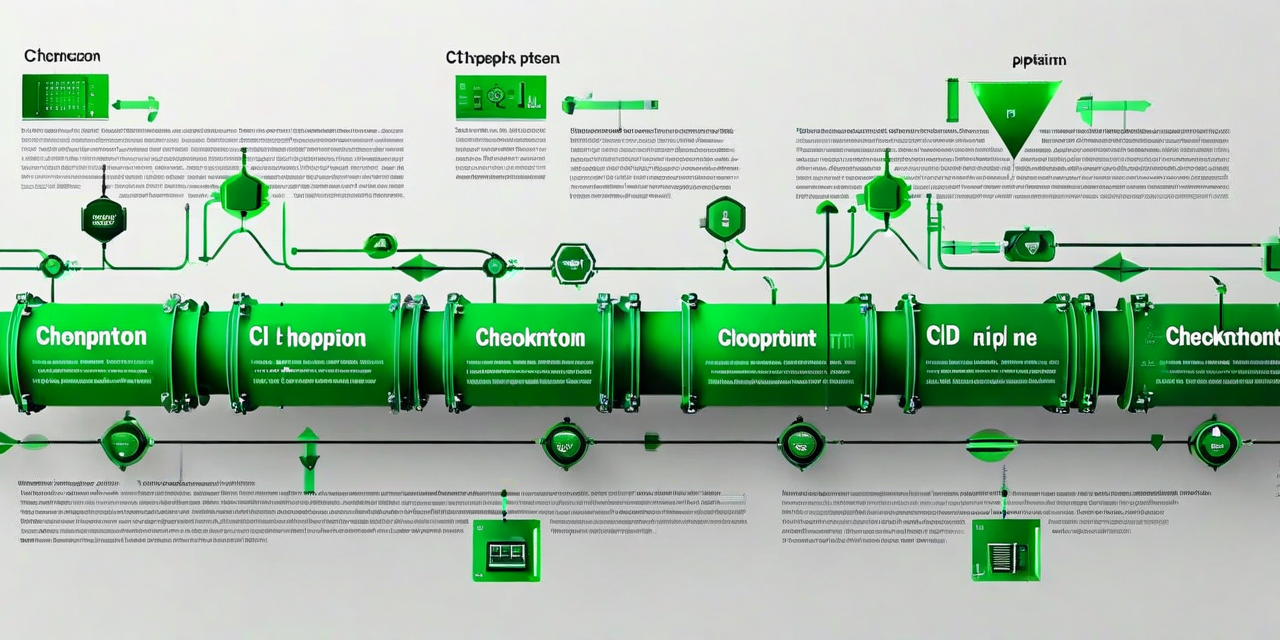
The recommended pipeline structure:
- Stage 1 (parallel): Linting + type checking + unit tests + AI code review
- Gate: Block merge if linting, type checking, or unit tests fail. AI review results appear as PR comments but do not block merge.
- Stage 2 (sequential): Integration tests, if any
- Deploy gate: Require passing Stage 1 and Stage 2 before deployment
An exception to the non-blocking rule: configure AI review to block on high-severity security findings (hardcoded credentials, SQL injection patterns). These findings have near-zero false positive rates and real consequences if missed. Blocking the pipeline on them is appropriate.
GitHub Actions Integration
DeepNest's GitHub Actions integration is a composite action that runs the AI review engine against the diff of a pull request and posts structured findings as PR review comments. The integration requires a DeepNest API token stored as a repository secret and a workflow file in your .github/workflows directory.
A minimal integration looks like this in your workflow YAML:
- Add a
deepnest-reviewjob that runs onpull_requestevents - Check out the repository with full history (needed for diff computation)
- Run the DeepNest action with your API token and configuration
- The action posts line-level comments on the PR for specific findings and a summary comment with the aggregate quality assessment
The review runs on the diff only — not the full codebase — which keeps review time under 90 seconds for typical PRs. Large PRs (500+ changed lines) may take up to 3 minutes. Configure the timeout appropriately to avoid false pipeline failures.
Key configuration options for the GitHub Actions integration: severity-threshold (minimum severity to post a comment — start with "medium" and adjust), security-blocking (true/false — whether security findings block the merge), and review-scope (diff-only vs. diff-plus-context — the latter analyzes surrounding unchanged code for consistency, with a modest performance cost).
GitLab CI Integration
The GitLab CI integration follows the same architecture. DeepNest provides a Docker image that runs the review engine and a CI/CD variable configuration that maps GitLab merge request context to the review API. The key difference from GitHub is that GitLab's merge request notes API requires different authentication configuration — use a project-level CI/CD variable with the DeepNest token rather than a secrets store.
Add the DeepNest review stage to your .gitlab-ci.yml. Set the DEEPNEST_TOKEN variable in your project settings under Settings → CI/CD → Variables, marked as protected and masked. The review job outputs a JUnit XML report that GitLab can parse and display in the merge request interface, giving you structured test results alongside the inline comments.
Calibrating the Review Engine
The single most important factor in whether AI code review adds value is calibration. An uncalibrated review engine produces a high volume of comments, most of which are not actionable or are already caught by existing tools. Engineers learn to ignore all of it, including the comments that matter. Calibration prevents this outcome.
Three calibration steps have the largest impact:
Configure the codebase context. Connect DeepNest to your repository and let it index your conventions and patterns before enabling pipeline review. Without this context, the review engine evaluates code against general best practices rather than your specific standards. Most false positives disappear after indexing because the engine stops flagging patterns that are intentional conventions in your codebase.
Set appropriate severity thresholds. Start with severity "high" only (security findings and definite logic errors) for the first two weeks. Review the findings. Adjust the threshold down to "medium" once you have confirmed that high-severity findings are useful signals and you are ready for a higher comment volume. Most teams stabilize at "medium" severity, which surfaces actionable issues without generating noise.
Enable learning from feedback. DeepNest's review engine can learn from developer responses to comments. When a developer dismisses a comment as "not applicable", that feedback is incorporated into the model's understanding of your codebase. After 30–50 feedback events, the false positive rate typically drops by 40–60% for your specific repository. This learning phase is worth the upfront noise — the engine gets substantially more useful over time.
Measuring the Impact
Teams that implement AI code review in CI/CD typically track four metrics to measure impact. Defect escape rate (bugs found in production versus bugs found in review) is the primary quality metric. Review cycle time (time from PR open to merge) should be watched carefully — AI review should reduce cycle time by catching issues earlier, not increase it by adding review overhead. Coverage quality score (AI assessment of test meaningfulness, not just percentage) is a leading indicator of test suite health. And security finding rate is tracked separately to confirm that security coverage is improving over time.
Across teams in DeepNest's customer base that have implemented pipeline AI review and measured these metrics, the consistent findings are: defect escape rate drops 25–35% in the first quarter, review cycle time is unchanged or marginally shorter (the AI-caught issues would have been caught in human review anyway, just later), and coverage quality score improves as engineers receive specific feedback about low-quality tests. The security finding rate typically surfaces a backlog of existing issues in the first two weeks, then stabilizes at a lower baseline as the team adopts the patterns the review engine enforces.